How to Become a Sound Healer in Australia (Training, Certification & Pathway)
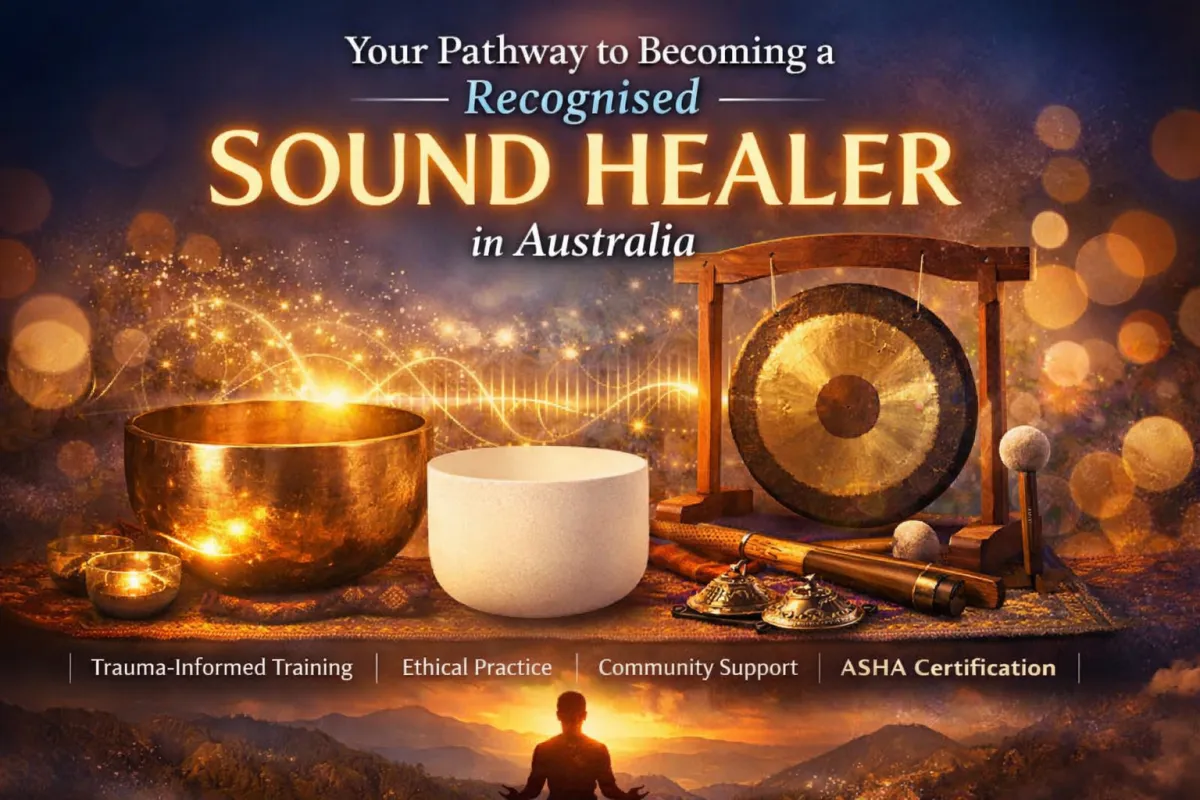
Your Pathway to Becoming a Recognised Sound Healer in Australia
If you feel called to work with sound — and want a pathway that honours both ancient tradition and modern professional standards — you are in the right place.
In Australia, being a recognised sound healer is not about titles or instruments. It’s about how you practise — safely, ethically, and with the right training and support behind you.
The Australian Sound Healers Association (ASHA) exists to raise that standard.
As a not-for-profit health promotion charity, ASHA is dedicated to improving wellbeing through sound and vibrational therapy, while supporting education, ethical practice, and professional pathways across Australia .
What “Recognised” Means in Australia
Sound therapy is not currently a government-regulated profession in Australia.
Instead, recognition comes from:
Structured, competency-based training
Trauma-informed, ethical practice
Professional readiness (documentation + insurance)
In real terms, recognised practitioners:
Work within clear scope of practice
Use intake forms, consent, and session notes
Understand contraindications and referrals
Engage in ongoing learning and support
Hold (or are eligible for) appropriate insurance
This is the standard ASHA is building nationally.
The ASHA Pathway at a Glance
1. Explore and Experience
Start by experiencing sound healing for yourself.
Attend sessions, explore different instruments, and reflect on whether you feel called to:
Facilitate group sessions (sound baths)
Or eventually work one-to-one
No musical background is required — just curiosity, presence, and care.
2. Begin with Group Sound Healing Training (Modules 1–6A)
This is your entry point into professional practice.
👉 Explore the full training here:
https://australiansoundhealersassociation.com.au/group-sound-healing-training
This training focuses on safe, trauma-informed group facilitation and gives you the foundations to begin confidently.
You’ll learn:
Principles of sound (frequency, vibration, resonance, entrainment)
How sound affects the nervous system
Instrument techniques and soundscape creation
Trauma-informed facilitation and pacing
Group session design, flow, and delivery
The curriculum integrates both traditional knowledge and modern science around sound and wellbeing .
Training Structure & Commitment
Total Training: ~150 hours
Duration: Typically 6 months (self-paced)
Weekly Commitment: ~4–6 hours
Delivery:
Online learning (Thinkific)
Monthly live Zoom mentoring (Q&A + peer support)
This structure ensures you are not just learning theory — but developing real facilitation skills with guidance.
Practice with Support (Not Alone)
One of the biggest differences with ASHA is community-supported learning.
During your training, you will:
Practice in safe, supported environments
Use professional intake and consent templates
Develop your facilitation style
Ask real-world questions in live mentoring sessions
These Zoom sessions function like group supervision, helping you build confidence and clarity.
Assessment & Certification
After completing Modules 1–6A and all assessments, you will receive:
🎓 ASHA Certification: Group Sound Healer
This recognises that you can:
Facilitate safe group sound sessions
Apply trauma-informed principles
Work ethically and professionally
Assessment includes practical application, not just theory — ensuring you are truly ready to work with people .
Safety, Ethics & Scope of Practice
At ASHA, safety comes first.
You will be trained to:
Screen participants appropriately
Recognise contraindications (e.g. seizures, acute mental health conditions)
Avoid making medical or exaggerated claims
Refer to other professionals when needed
ASHA promotes a science-aware, ethical approach, encouraging practitioners to balance experience with responsible communication .
Insurance & Professional Readiness
To practise professionally, insurance is essential.
ASHA partners with Gallagher (Arthur J. Gallagher & Co.), providing tailored insurance options for sound practitioners.
As a student:
You are required to hold Student Practitioner Insurance
As a practitioner:
Public Liability Insurance (PL) → for group sessions
Professional Indemnity (PI + PL) → for 1:1 work
Insurance:
Protects you legally and financially
Is often required by venues
Signals professionalism and trust
ASHA provides a clear pathway to access this cover as you train and graduate .
Community & Ongoing Support
You are not doing this alone.
With ASHA, you gain access to:
Monthly live mentoring (Zoom)
Peer practice circles
Thinkific learning community
Ongoing education and support
This is where confidence grows — and where many practitioners stay connected long after certification.
Timeline, Cost & Access
Training Hours: ~150 hours
Duration: ~6 months (flexible pacing)
Delivery: Online + live mentoring
Investment: $1,988 AUD
Access: Immediate upon enrolment
After Certification: What Happens Next?
Once certified as a Group Sound Healer, you can:
Facilitate group sound sessions
Join ASHA membership
List your services in the practitioner directory
Access insurance pathways
Continue into advanced training for 1:1 work
This is where your practice begins to take shape.
Frequently Asked Questions
Do I need a qualification to practise?
Not legally — but professionally, yes. Training supports safety, credibility, and insurance eligibility.
How long does it take?
Approximately 150 hours, typically completed over 6 months.
Do I need a music background?
No. The training is designed for complete beginners.
What insurance do I need?
Students: Student Practitioner Insurance
Group facilitators: Public Liability
1:1 practitioners: Professional Indemnity + Public Liability
Begin Your Pathway
If you feel called to work with sound and support others through group experiences, this is your next step.
👉 Explore the Group Sound Healing Training and enrol here:
https://australiansoundhealersassociation.com.au/group-sound-healing-training
You’ll gain:
A trauma-informed facilitation framework
150 hours of structured training
Live mentoring and community support
Certification as a Group Sound Healer
Key Takeaway
In Australia, recognition as a sound healer comes from:
Training quality + ethical practice + professional readiness.
With ASHA, you gain all three — and a community to grow with.