




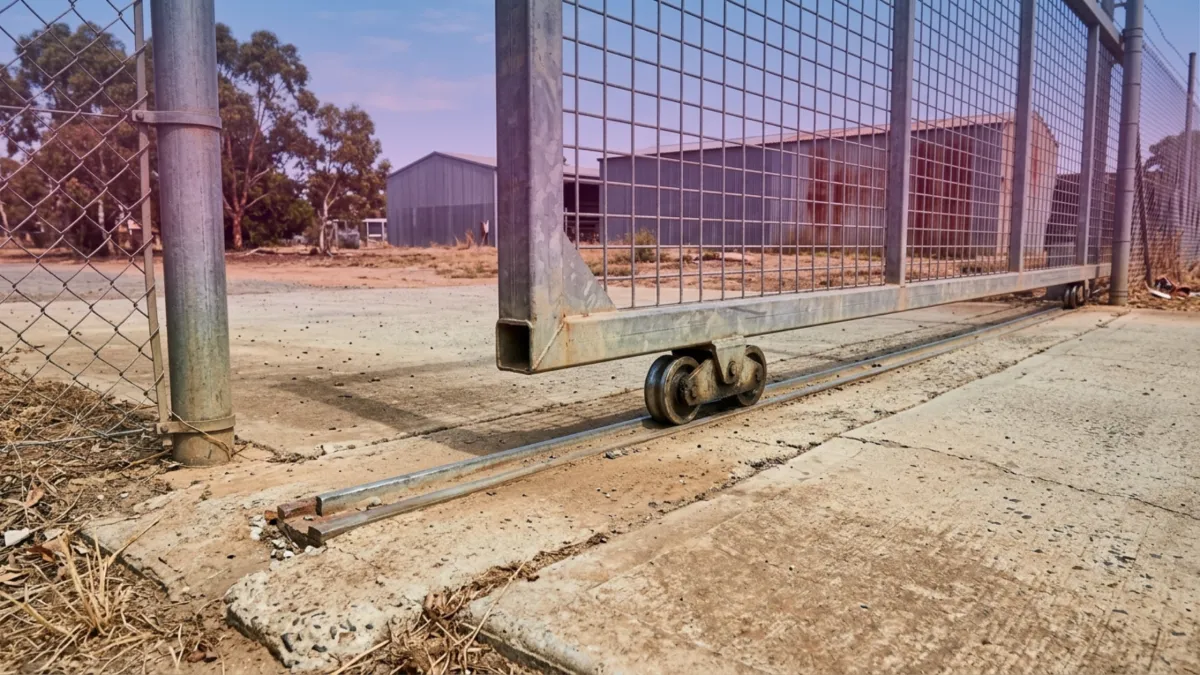
When the Job Is Finished, the Safety Risk May Not Be
There is a point on every job where people are ready to move on.
The gate is installed.
The equipment is fitted.
The structure is standing.
The invoice is sent.
The next job is waiting.
But “finished” does not always mean safe.
That is the uncomfortable lesson behind a recent NSW matter reported by SafeWork NSW, where a 200 kg sliding gate overran its supports and fell onto a woman and her three young children as they were walking along a road.
The company involved had manufactured, supplied, and installed the gate. The sole director was later convicted and fined for failing to exercise due diligence.
It is a confronting case, not just because of the weight of the gate, but because of where the risk sat.
This was not a worker being injured during fabrication.
It was not a site crew dealing with a hazard during installation.
The gate had already been installed.
The risk showed up after the job was supposedly done.
That is why this matters well beyond one gate, one company, or one court outcome.
The Risk Does Not Always End at Handover
In a lot of workplaces, there is a natural focus on getting through the job safely.
Fabricate it safely.
Transport it safely.
Install it safely.
Commission it safely.
All of that matters.
But for anything designed, built, modified, supplied, or installed for ongoing use, the safety question does not stop at handover.
The real test is what happens after people start using it.
Will it hold up under normal use?
Will it fail if someone uses it slightly differently than expected?
Will it remain stable if conditions change?
Will a customer, visitor, worker, contractor, or member of the public be exposed if something goes wrong?
That is where this kind of incident becomes a broader WHS lesson.
Because plenty of risks do not look dangerous once the work is complete.
They look finished.
Finished Work Can Still Carry Live Risk
Installed equipment can create a false sense of closure.
A sliding gate is installed, so it is assumed to be safe.
A barrier is fixed, so it is assumed to be secure.
A rack is assembled, so it is assumed to hold.
A guard is fitted, so it is assumed to protect.
A platform is built, so it is assumed to support the load.
But assumptions are not controls.
Anything that can move, collapse, fall, trap, crush, overload, or fail needs to be treated as a live safety risk until it has been properly designed, installed, tested, and verified for real use.
That applies across many industries.
In construction, it might be gates, barriers, access systems, temporary works, or structures that become part of the finished environment.
In manufacturing, it might be guarding, conveyors, platforms, racking, or machine modifications.
In agriculture, it might be gates, yards, augers, silos, pumps, or loading systems.
In logistics and warehousing, it might be pallet racking, dock equipment, gates, bollards, or traffic control barriers.
Different settings.
Same question.
Has the installed item actually been made safe for the people who will be around it?
Design Assumptions Need to Match Real Use
One of the biggest gaps in installed equipment safety is the difference between how something is expected to be used and how it is actually used.
On paper, an item may look suitable.
In real life, it might be affected by:
slope
wind
vehicle impact
poor visibility
wear and tear
repeated manual handling
public interaction
lack of maintenance
unclear operating limits
people using it in a way the designer did not expect
That does not mean you can predict every possible misuse.
But it does mean you need to think beyond ideal conditions.
A gate, rack, platform, guard, or access system has to work in the real world, not just in the design file.
This is where safety cannot rely on common sense alone. As we explored in The Hidden Blueprint: 5 Surprising Truths About Australian Construction Safety, practical WHS systems need to hold up beyond assumptions, habits, and what people think they already know.
Installation Is Not Just Assembly
Good installation is not just about putting the pieces together.
It is about making sure the finished item is safe, stable, suitable, and functioning as intended.
That means checking the details that are easy to overlook when everyone is focused on getting the job done:
Are the supports adequate?
Are the fixings suitable?
Are stops, guides, or restraints in place?
Has movement been controlled?
Has the item been tested under realistic conditions?
Is there a clear maintenance requirement?
Has the client or end user been told what needs to be checked over time?
If something is heavy, moving, elevated, pressurised, powered, load-bearing, or used by the public, these checks matter.
They are not finishing touches.
They are part of the safety control.
The Public-Facing Risk Is Easy to Miss
One of the reasons this case stands out is that the people injured were not workers.
They were a woman and her children walking nearby.
That is an important reminder.
WHS risk does not always stay neatly inside a worksite boundary.
If your business designs, supplies, installs, modifies, or maintains something that other people may interact with, the risk can extend to:
customers
tenants
delivery drivers
contractors
visitors
neighbouring businesses
members of the public
children and families passing by
That changes the way the risk needs to be considered.
A trained worker might understand a hazard.
A member of the public will not.
A worker might know not to stand near a moving gate, unstable rack, or temporary barrier.
A child walking past will not.
That is why public-facing equipment and structures need strong design, clear installation controls, and proper verification before they are left in use.
Due Diligence Is Practical, Not Theoretical
Due diligence can sound like a legal term that sits far away from daily work.
In practice, it comes back to a very practical question:
Are the right people making sure the business has the systems, resources, and checks needed to manage the risk?
For installed equipment, that might include:
using competent designers, fabricators, installers, and contractors
making sure design assumptions are understood
checking installation quality before handover
confirming testing and commissioning have been completed
keeping records of critical checks
making sure maintenance or inspection requirements are communicated
reviewing whether similar work needs to be improved
This is especially important in small businesses, where the owner or director may be closely involved in quoting, organising, supervising, and signing off work.
When one person sits close to the whole process, informal decision-making can become a risk.
“Looks right” is not enough.
“Should be fine” is not enough.
There needs to be a reliable way to know the risk has been controlled.
What This Means For You
If your business designs, manufactures, supplies, installs, modifies, repairs, or maintains equipment or structures, this issue is worth taking seriously.
The question is not just: “Did we finish the job?”
The better question is: “Have we left behind something that is safe for the people who will use it, work near it, or pass by it?”
That applies whether you are installing a large sliding gate, modifying machinery, fitting guarding, building access systems, setting up racking, installing barriers, repairing plant, or changing how equipment operates.
The risk may not show up immediately.
It may appear days, weeks, or months later when someone uses it in ordinary conditions.
That is why handover cannot be the point where safety thinking stops.
Practical Checks Before You Call a Job Finished
Before installed equipment or structures are handed over, take time to check the basics properly.
Confirm the design is suitable for real-world use, not just ideal conditions
Check that load, movement, travel, stopping, and stability risks have been considered
Verify critical supports, fixings, restraints, stops, guides, and guards
Test the item under realistic operating conditions before handover
Identify who may be exposed to the risk, including workers, visitors, customers, and the public
Provide clear instructions for safe use, inspection, maintenance, and limitations
Keep records of key checks, especially where failure could cause serious harm
Review similar installations if one issue reveals a wider pattern
These are not complicated steps.
But they require intention.
And they need to happen before everyone moves on to the next job.
The Hidden Risk Behind “It Looks Fine”
Some risks are easy to see.
Others are hidden behind work that looks complete.
A gate can look secure until it moves too far.
A rack can look stable until it is loaded.
A guard can look fitted until someone reaches around it.
A platform can look finished until it is used under pressure.
That is why visual completion is not the same as safety.
A site, structure, or piece of equipment can look organised on the surface while serious operational risks are still sitting underneath, something we unpacked further in The Sites That Looked Safest Sometimes Worried Me the Most.
The lesson is simple.
Do not let “finished” become the point where questions stop.
Final Thought
The real test of installed equipment is not the day it is handed over.
It is every day after that.
Every time someone opens the gate.
Every time someone uses the platform.
Every time someone loads the rack.
Every time someone walks past the structure.
Every time someone trusts that the finished work is safe.
That is why design, installation, verification, and maintenance cannot be treated as separate pieces.
They are part of the same safety outcome.
When one part is weak, the whole system is exposed.