




The Conveyor Risk Most Sites Overlook — And Why It’s Not Just a Factory Problem
A recent fatal incident on a poultry farm in Victoria highlights a risk that many construction businesses don’t immediately think about.
A worker became entangled in a conveyor system while carrying out routine work.
It wasn’t a dramatic event.
It wasn’t a one-off failure.
It was a system that allowed unsafe work to happen.
At first glance, it’s easy to think:
“That’s agriculture. That doesn’t apply to us.”
But look closer at the setup and the same risk exists across many construction environments.
This Isn’t About the Industry — It’s About the Hazard
The incident involved a conveyor system used to move material.
To carry out routine checks, workers had to:
Remove guarding
Adjust components while the system was running
Work near moving parts
Rely on isolation points that weren’t located where the work actually happened
That combination created exposure to a known hazard:
👉 In-running nip points
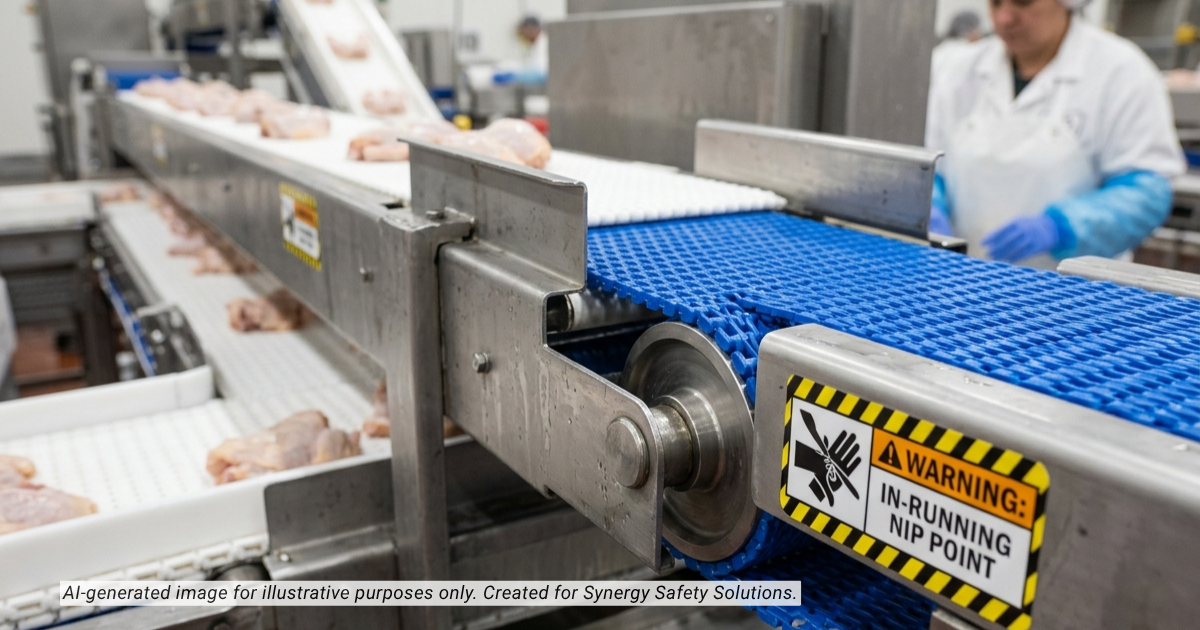
This isn’t unique to poultry farms.
You’ll find the same setup in:
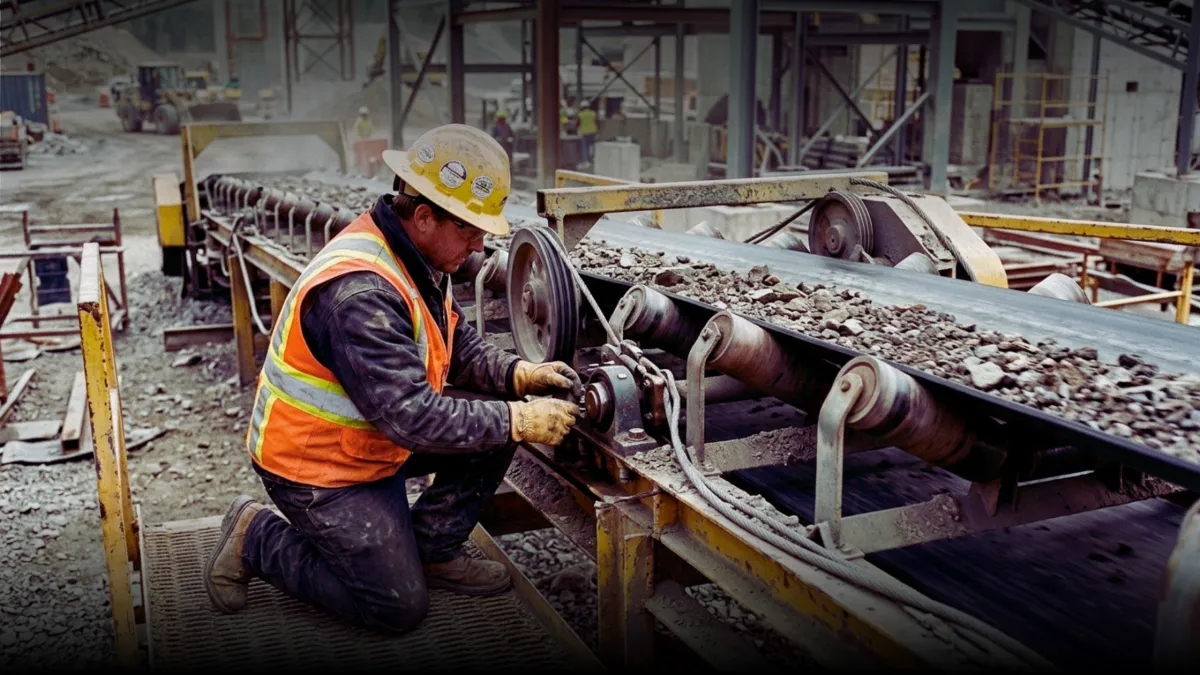
mobile conveyors
crushing and screening plants
batching systems
materials handling equipment
Different industries. Same risk.
When the System Forces Unsafe Work
What stands out in this case isn’t just the presence of a hazard.
It’s how the system required people to work.
To complete basic tasks, workers had to:
Remove guards
Work on live equipment
Operate without clear visibility between workers
Rely on controls that didn’t match the task
That’s not a behaviour issue.
That’s a design issue.
When systems are set up this way, people don’t choose to work unsafely.
They’re left with no practical alternative, reinforcing what we often see in construction, where safety outcomes are shaped more by system design than individual behaviour, as highlighted in The Hidden Blueprint: 5 Surprising Truths About Australian Construction Safety.
Why Guarding and Isolation Still Fail
Most construction businesses understand guarding.
They understand isolation.
But failures still happen not because the concepts are unclear, but because the application doesn’t match reality.
Common gaps include:
Guards that need to be removed to do the job
Isolation points located away from the task
No safe way to observe or adjust equipment while it’s operating
Poor communication between operators and workers
Lack of control over who can restart equipment
These gaps don’t show up on paperwork.
They show up in how work is actually carried out where awareness, observation, and active decision-making play a role, as explored in 5 Unexpected Truths About Site Safety.
The Construction Connection
This is where the cross-industry lesson matters.
In construction, we often focus on:
Working at heights
Mobile plant interaction
Excavation risks
But entanglement hazards don’t always get the same attention, even though the consequences are just as severe.
On many sites, conveyors and moving equipment are:
Brought in temporarily
Operated by subcontractors
Maintained under time pressure
Adjusted on the fly
That combination increases the likelihood that systems aren’t fully thought through.
Risk doesn’t come from the equipment alone.
It comes from how the work is designed around it, a pattern seen across multiple industries, including construction, as explored in Lessons from Australia’s Beautiful and Broken Mining Country – What It Means for Construction.
What This Means For Your Site
If you have conveyors or moving equipment on your site, even temporarily, this is worth reviewing.
Ask practical questions:
Can tasks be completed without removing guards?
Are isolation points located where the work actually happens?
Can workers safely observe or adjust equipment without exposure?
Is there clear communication between operators and anyone working near the equipment?
Does the system prevent unexpected start-up?
If the answer to any of these is unclear, there’s a gap.
And gaps in systems are where incidents start.
A Simple Action Checklist
Start with a focused review:
Identify any conveyors or similar moving equipment on site
Observe how maintenance and adjustments are actually carried out
Check whether guards are being removed to complete tasks
Review isolation procedures against real work conditions
Confirm who has control over starting and stopping equipment
Speak to workers about how they manage these tasks in practice
These aren't complex changes.
They're about aligning the system with the work.
Bringing It Back to Reality
This incident didn’t happen because someone ignored the rules.
It happened because the system didn’t support safe work.
That’s the part worth paying attention to.
Construction doesn’t operate in isolation.
The same hazards and system failures show up across industries, sometimes more clearly outside our own.
When you look at incidents this way, they become less about “what went wrong” and more about:
“Where does this exist in our work?”
Because if the setup exists, the risk exists.
And recognising that early is what prevents the outcome.
If you want support reviewing plant safety, guarding, or how your systems handle high-risk equipment, get in touch with Synergy Safety Solutions for a practical review of your systems.