Secrets of the Silhouette
The Secrets of the Silhouette: How to Dress for Your Shape, Proportions and Personal Style
Have you ever put something on and thought, this should work — but somehow it just
doesn’t?
It may be the right size. The colour may be close enough. The fabric may even feel lovely. Yet something still feels off. If you’ve ever had that moment, let me reassure you: it is not necessarily you, and it is not always the garment. Very often, it is the silhouette — the overall line, shape, and visual message your clothing is creating.
That is why understanding silhouette matters so much.
When we talk about personal style, people often jump straight to colour, fashion trends, or body shape labels. But before anyone notices your necklace, your handbag, or even your expression, the eye reads your outline. It reads the architecture of your clothing. It notices whether the line is long or broken, soft or sharp, balanced or overwhelming. In those first few seconds, the brain is already forming an impression.
And that is the beauty of learning the language of the silhouette: once you understand it, getting dressed becomes easier, smarter, and so much more intentional.
What is silhouette in fashion?
In simple terms, silhouette in fashion is the overall shape your outfit creates when someone looks at you.
It is influenced by:
the cut of the garment
the fit
where the waist sits
the length of jackets, skirts, and trousers
how much volume is on the top or bottom
the placement of focal points
the way lines lead the eye around the body
My Private Stylist and Men of Style explain this beautifully: the outer silhouette, inner design lines, fit, fabric, and focal points all affect how height, width, and proportion are perceived. Chosen well, they can flatter and balance the body beautifully.
So if you have ever wondered why one jacket makes you look pulled together and another makes you feel boxy, or why one dress makes you feel elegant and another leaves you feeling uncomfortable, silhouette is usually part of the answer.
Why silhouette matters more than people realise
Clothing always says something before you do. That is one of the reasons I come back to this topic again and again. What you wear is speaking before you open your mouth, and the silhouette is often the first part of that conversation.
A silhouette can make you appear:
taller or shorter
broader or slimmer
stronger or softer
more modern or more traditional
more polished, more relaxed, more dramatic, or more approachable
That does not mean you must dress by rigid rules. Quite the opposite. The point is not restriction. The point is awareness. These are not rules so much as principles — the way clothing communicates with the body and with the people around us.
And once you understand those principles, you have more freedom, not less.
The five secrets of the silhouette
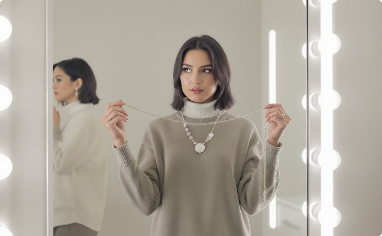
One of the easiest ways to understand how to dress for your shape and proportions is to think about the five conversations your clothes are already having.
1. Vertical lines create length and authority
Vertical influence is one of the most powerful tools in style. Long, uninterrupted lines tend to feel elegant, refined, and quietly authoritative. Think of monochromatic dressing, single-breasted jackets, long cardigans, flowing dresses, and outfits that do not have too many visual interruptions.
Vertical design influence increases apparent height, decreases apparent width, and gives an image of strength and professionalism.
This is why even a simple change — reducing contrast, removing a heavy waistband, or choosing a longer jacket line — can make such a difference. Belts, contrasting waistlines, and chopped-up colour blocks can interrupt that flow. Sometimes that is helpful. Sometimes it is not. The key is understanding what effect you are creating.
2. Horizontal lines create width and stability
Horizontal lines are often treated like the enemy, but that is far too simplistic. Horizontal detail does not automatically make you look wide in a bad way. It can also create balance, steadiness, and structure. Remember ina storm we use the horizon calming ourselves. That is exactly what horizontal influence can do in clothing too.
The real issue is placement.
If a line sits across the shoulder, it can broaden the upper body. If it sits across the hips, it can widen the lower body. That may be exactly what you want if you are balancing proportions. The professional manuals explain that when one area is narrower than another, visually widening the smaller area can restore balance.
So rather than asking, “Can I wear horizontal lines?” the better question is, “Where should they go for the effect I want?”
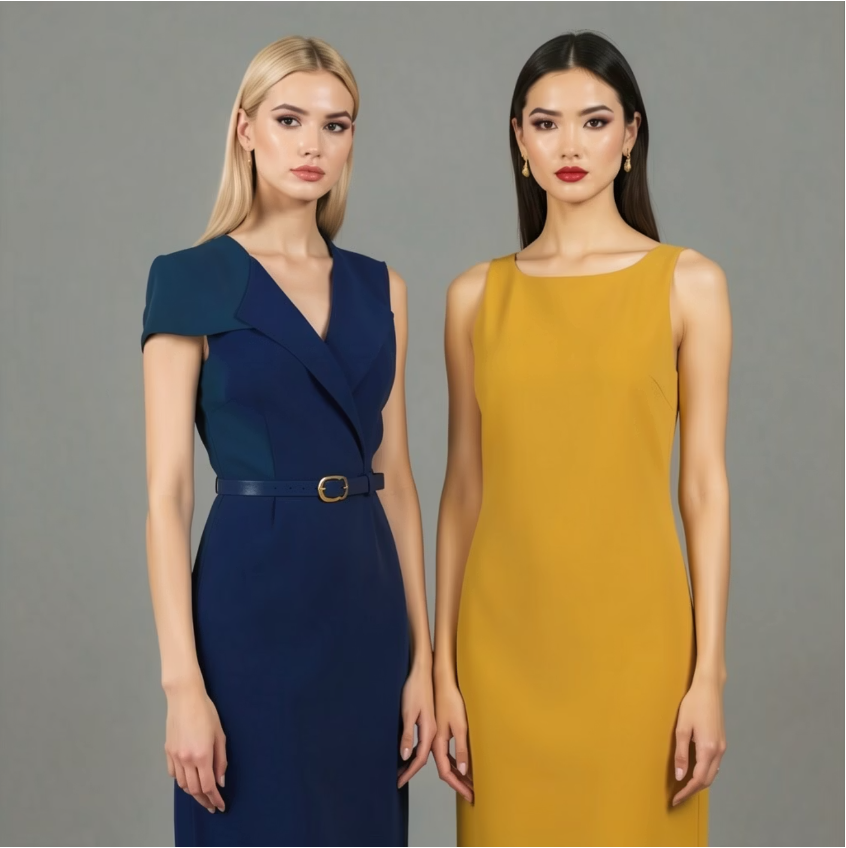
3. Waist definition changes the whole message
Waist emphasis is one of the biggest styling decisions you can make. A defined waist gives structure. It often creates an hourglass effect and can feel polished, feminine, traditional, or beautifully finished. A column silhouette, on the other hand, can feel fluid, modern, effortless, and elegant.
The important thing here is that neither is right or wrong.
Some women look and feel wonderful in shaped garments. Others look better in pieces that skim and flow. Your outer silhouette needs to work with your shape and the best garments are those that conform harmoniously with you.
So if you love a belt, wear it with joy. If you prefer a long clean line through the torso, there is beauty in that too.
4. Balance matters more than fashion trends
One of the easiest styling mistakes to make is having too much going on at once. Too much volume on top and too much on the bottom can leave an outfit feeling visually heavy, busy, or simply overwhelming.
Recently I saw a woman in a fabulous bubble skirt paired with a voluminous tied shirt. Each piece has personality, but together the outfit lost balance.
That is such a useful reminder.
If you have volume on the bottom, keep the top cleaner or more fitted. If you have volume on the top, keep the lower half sleeker. This does not mean every outfit has to be conservative. It just means the eye needs somewhere to settle.
Balance is where style becomes more polished.
How to find your body proportions
When people search for how to dress for your body shape, they often stop at triangle, rectangle, or hourglass. But in reality, proportion goes further than that. Your leg-to-torso ratio, your natural waist position, your shoulder-to-hip balance, and your personal scale all matter.
That is why the same “style rule” can work beautifully on one woman and feel completely wrong on another.
A simple way to check your vertical proportions
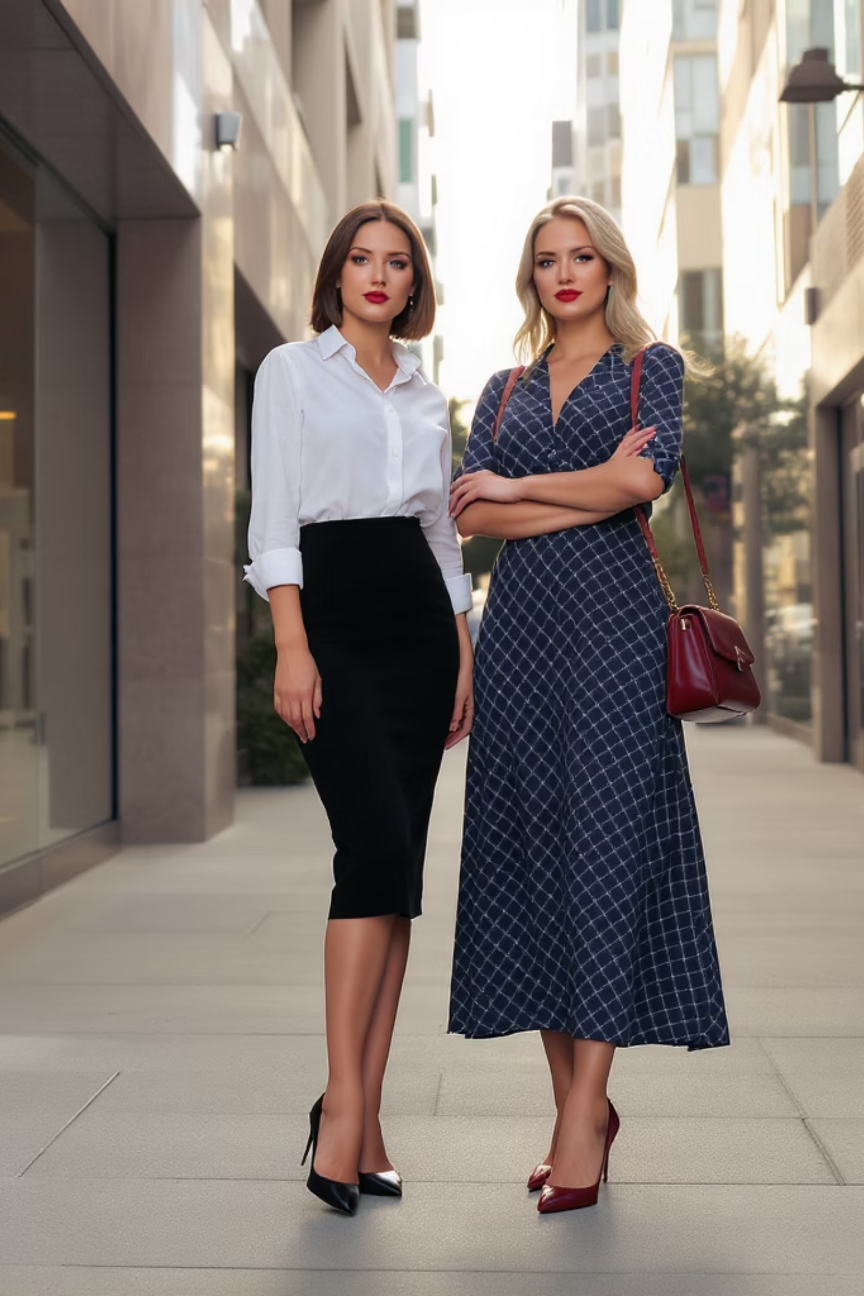
One of the most useful visual checks is where your waist sits in relation to your elbow. If your waist sits above your elbow, you are likely long-legged; if it sits at your elbow, you are balanced; and if it falls below, you are more likely short-legged and long-torsoed.
This matters because it affects jacket lengths, accessory lengths, hemlines, and where the eye should be drawn.
For example:
women with shorter legs often look great with cropped-to-knuckle jackets, higher focal points, and low contrast between hemline, leg and shoe
women with longer legs can often handle longer tops, lower focal points, and more visual interest further down the body
These are not rules to box you in. They are clues that help you understand why some things feel more balanced than others.
Focal points: where do you want the eye to land?
If there is one styling concept I wish more women understood, it is focal point placement.
A focal point is simply the feature that draws the eye first. It might be your earrings, your neckline, your collar, your belt, your shoes, a bold jacket, or a strong colour contrast. We are all creating focal points whether we mean to or not.
High focal points bring the eye up toward the face and shoulders. Mid-level focal points pull attention to the waist. Lower focal points bring attention downward to the legs, hemline, or shoes. Women with shorter legs often benefit from higher focal points, while those with longer legs can carry lower focal points more easily.
This is where style becomes very personal.
Ask yourself:
What is the first thing people see when they look at me?
Is that where I want their eye to go?
Am I repeating the same focal point every day without realising it?
That kind of awareness changes everything.
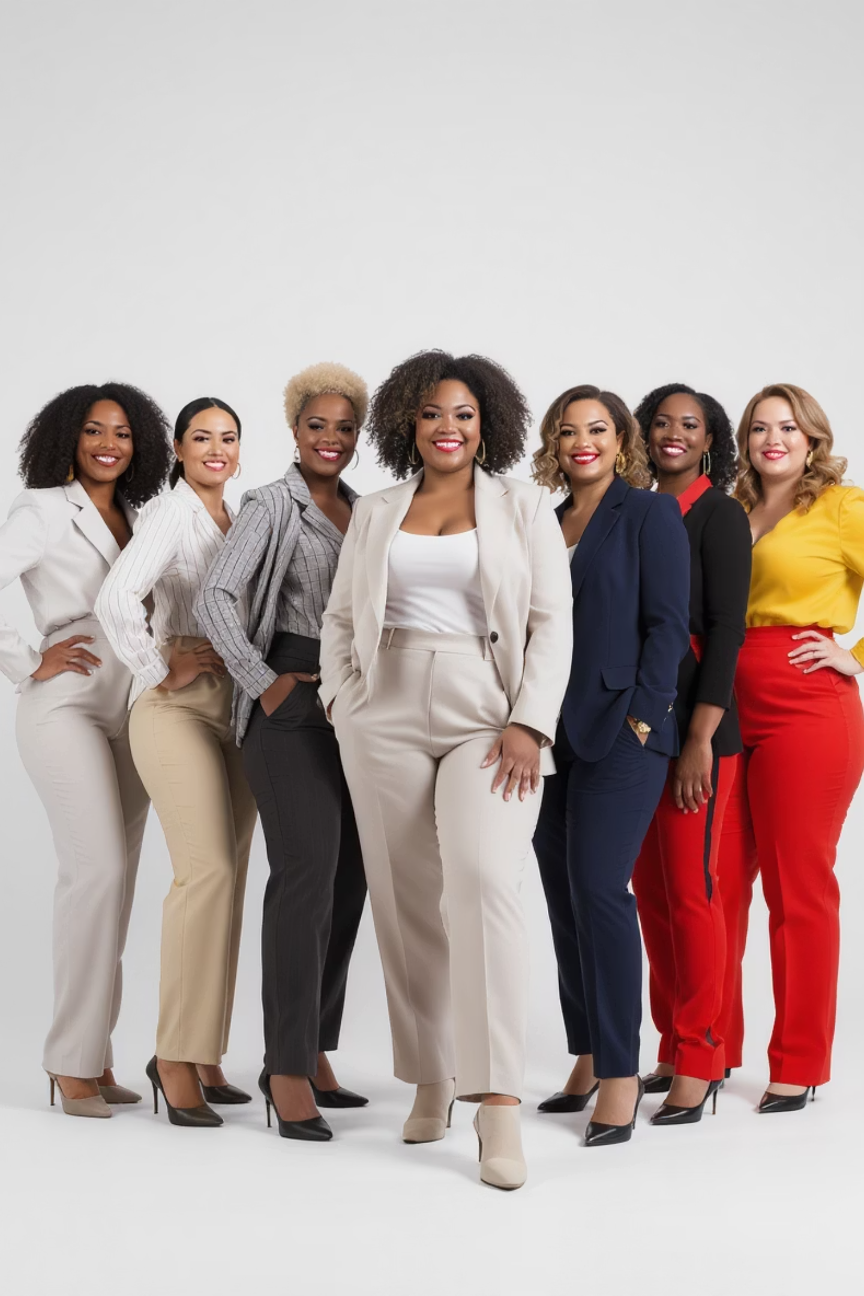
You do not need to “fix” your body
This is one of the most important parts of the whole conversation.
Silhouette is not about correcting a flawed body. It is not about telling women they are too big, too small, too curvy, too straight, too tall, or too short. It is about understanding how clothing works with shape, scale, proportion, and personality so you can make informed choices. Remember this: we are all normal, and looking great is not limited to your size, age, or shape.
That is worth repeating.
You are not the problem. You may simply need better information.
Sometimes that means acknowledging that a certain jacket length is throwing everything off. Sometimes it means recognising that a large print is overwhelming your frame, or that a colour block is cutting you in half. Sometimes it means realising that the “safe” option is actually ageing you or dulling your presence.
But none of that means there is something wrong with you.
It simply means there is a smarter way to dress the body you already have.
Can you break the rules? Of course you can
One of my favourite ideas in this whole space is this: you can break any rule if you understand the rule you are breaking. That is such an empowering approach to style, because it moves us away from fear and into intention.
Can a petite woman wear a long skirt? Yes, if the line, proportion, and focal point are right.
Can a woman wear a crop top without a flat stomach? Yes, if the waist placement and styling support it.
Can you wear black? Of course — but know what it is doing near your face, across your proportions, and in contrast with the rest of your image.
That is modern style. Not fear. Not rigid rules. Not dressing to disappear.
Dressing with understanding.
The real secret of the silhouette
The real secret is not simply that certain lines make you look taller or slimmer. The real secret is that once you understand YOUR silhouette, you stop relying on luck.
You stop buying clothes that are “almost right.”
You stop assuming every uncomfortable outfit means something is wrong with your body.
You stop dressing by default.
Instead, you begin to choose with purpose.
You understand why one outfit feels elegant and another feels awkward. You know how to draw attention to your face, balance your body, and create the image you want. You learn how to use line, proportion, and focal points in a way that feels authentic rather than formulaic.
And perhaps most importantly, you begin to feel more confident in your own skin.
Because confidence is not about being a certain size. It is not about wearing what everyone else is wearing. It comes from knowing what works, why it works, and how to use that knowledge to express yourself well. That is the power of silhouette.
If you'd like to see a webinar on this very topic, we have one available for you here, and to find a local consultant who can help you find your secret Silhouette. Check out our global directory.
